
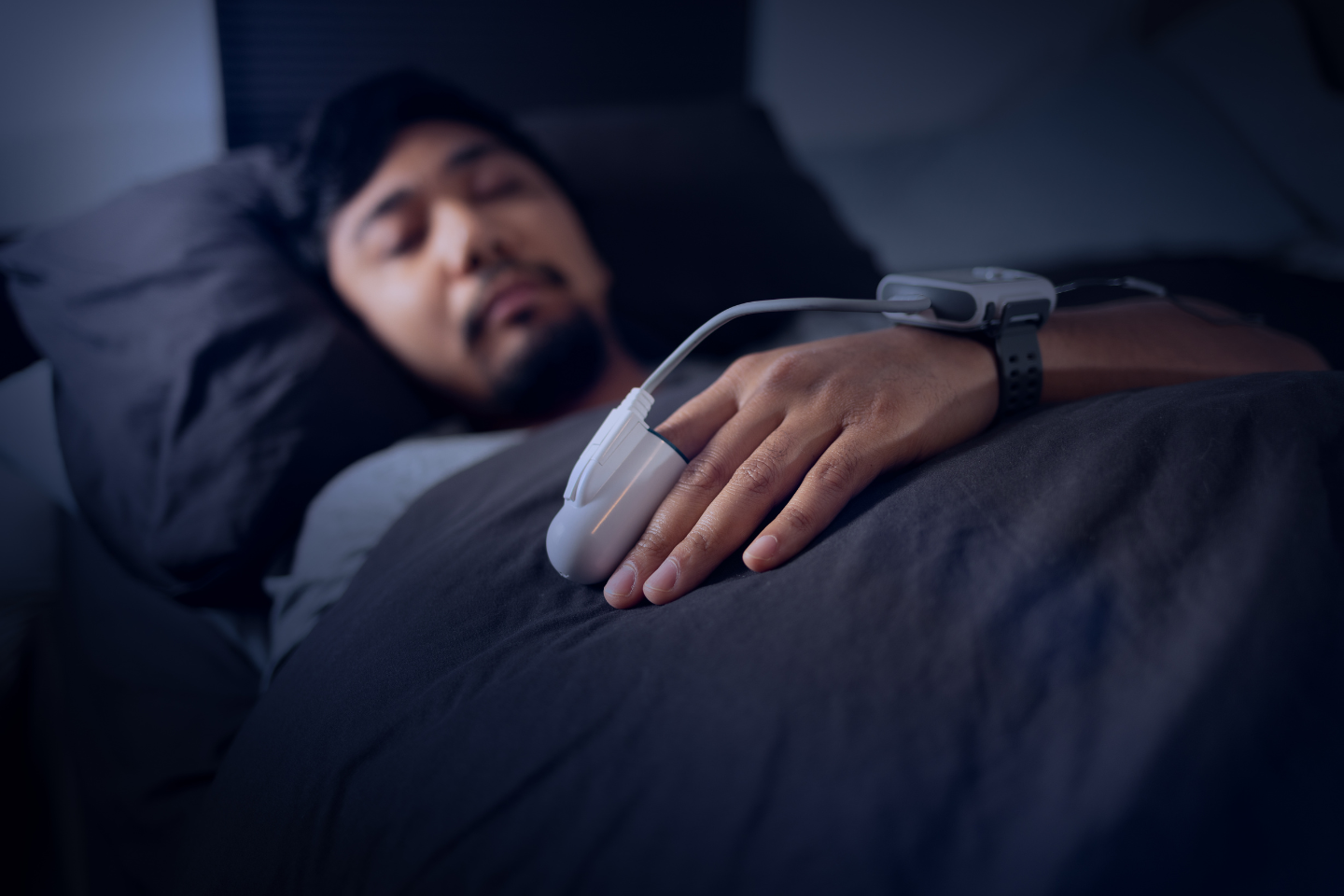
If you find yourself waking up tired every morning or if your partner complains about your loud snoring, you might be wondering what is going on with your health. Many people avoid seeking help because they do not want to spend a night in a cold, clinical sleep lab with wires attached to their heads. This is where home sleep apnea testing comes in. It allows you to get the answers you need from the comfort of your own bed.
At Dreamwell Center, we believe that everyone deserves a restful night. Our sleep consultation services are designed to make the diagnostic process as easy as possible. With convenient offices in Panama City, FL, and Santa Rosa Beach, FL, we help you navigate the path from restless nights to refreshed mornings.
What is a Home Sleep Test?
A home sleep test is a simplified version of the tests done in a hospital. It uses a portable device that tracks your breathing, oxygen levels, and heart rate while you sleep at home. Because you are in your own environment, the results often give a more realistic picture of how you sleep on a typical night.
Why Choose Home Testing Over a Lab?
The biggest benefit of home sleep apnea testing is comfort. Most people find it much easier to fall asleep in their own bed than in a strange room. It is also usually more affordable and easier to schedule. We often recommend this as a first step for patients who show clear signs of obstructive sleep apnea.
How to Prepare for Your Home Sleep Test
Preparation is the key to getting accurate data. You want the night of your test to be as normal as possible, but there are a few things you should keep in mind to ensure the sensors stay in place and record correctly.
Stick to Your Normal Routine
It might be tempting to go to bed early or try to sleep longer, but you should try to follow your usual schedule. If you typically go to bed at 10:00 PM, stick to that. Consistency helps the Dreamwell Center team see exactly what is happening during your standard rest cycle.
Watch What You Eat and Drink
On the day of your test, try to avoid caffeine after lunch. Caffeine can make it harder to fall asleep or change your sleep stages, which might interfere with the results. You should also avoid alcohol on the night of the test. While alcohol might make you feel sleepy, it relaxes the muscles in your throat and can make sleep apnea symptoms look worse than they normally are.
Skip the Afternoon Nap
Even if you feel exhausted, try to stay awake until your normal bedtime. You want to be tired enough to fall asleep easily once the equipment is on. This ensures that the home sleep apnea testing device captures enough hours of data for a clear diagnosis.
Setting Up the Equipment
When you receive your testing kit from our office, it might look a bit intimidating at first. However, these devices are designed to be user-friendly. Most kits include a small device that you wear around your chest, a clip for your finger, and a small tube that sits under your nose.
Placing the Breathing Sensor
The nasal cannula is a thin tube that monitors your airflow. You place the prongs in your nostrils and loop the tubing over your ears, much like a pair of glasses. It is important to make sure this stays secure so it can track every breath you take throughout the night.
Attaching the Pulse Oximeter
The pulse oximeter is a small clip or sleeve that goes on your finger. It uses light to measure the oxygen levels in your blood and your heart rate. If your oxygen levels drop during the night, it is a major sign that your breathing is being interrupted. This is a vital part of the sleep consultation services we provide.
Securing the Chest Belt
A belt goes around your chest or stomach to track the physical effort of breathing. It senses the rise and fall of your chest. If the belt shows you are trying to breathe but the nasal sensor shows no air is moving, it confirms an obstructive event.
During the Night: What Happens While You Sleep?
Once you turn the device on and fall asleep, the machine does all the work. It silently records data every second. Many patients worry about what happens if they have to get up to use the bathroom. Most home sleep apnea testing units are portable enough that you can simply walk with them, or you can briefly pause the recording if the instructions allow.
Tracking Oxygen and Heart Rate
One of the most important things the device looks for is a drop in oxygen. When you stop breathing, your brain eventually realizes something is wrong and sends a jolt of adrenaline to wake you up just enough to take a breath. This causes your heart rate to spike. By looking at these patterns, the team at Dreamwell Center can see how much stress your body is under.
Detecting Snoring and Body Position
Some devices also record snoring or track whether you are sleeping on your back or your side. Many people find that their apnea is much worse when they sleep on their backs. Knowing this helps us create a better treatment plan during your follow-up sleep consultation services.
What Happens After the Test?
In the morning, you will take off the sensors and return the equipment to our Panama City, FL, or Santa Rosa Beach, FL, office. Our specialists will then download the data and look for signs of sleep disorders.
Reviewing the Results
A board-certified sleep physician will look at the total number of times your breathing slowed or stopped per hour. This is known as the Apnea-Hypopnea Index. Based on this number, we can tell if you have mild, moderate, or severe sleep apnea.
Planning Your Treatment
Once we have a diagnosis, the next step is finding a solution. This might include a CPAP machine, an oral appliance, or myofunctional therapy. At Dreamwell Center, we do not just give you a report and send you on your way. We work with you to find a treatment that fits your lifestyle.
Common Myths About Home Sleep Testing
There is a lot of misinformation out there about sleep tests. Let’s clear up a few common misconceptions so you can feel confident about your home sleep apnea testing.
Myth 1: The Test is Hard to Set Up
Most people are surprised by how simple the devices are. We provide clear instructions and are always available at our Santa Rosa Beach, FL office to answer any questions before you head home for the night.
Myth 2: I Can't Sleep with Wires on Me
The sensors used today are very low profile. They are much less intrusive than the dozens of wires used in a hospital lab. Most people find they can sleep in almost any position without much trouble.
Myth 3: The Results are Not Accurate
While a lab test is more detailed, home sleep apnea testing is highly accurate for diagnosing obstructive sleep apnea in most adults. It is a reliable and scientifically backed way to start your journey to better health.
FAQs: Your Questions About Home Sleep Tests
Q: How many hours of sleep do I need for the test to work?
A: Most home sleep apnea testing devices require at least four to six hours of recorded data to be considered valid. If you have a very restless night and sleep less than that, you might need to repeat the test.
Q: Can I wear pajamas with the sensors?
A: Yes. You should wear comfortable, loose-fitting pajamas. The chest belt usually goes over your shirt, while the sensors for your nose and finger touch your skin directly.
Q: Will the device make noise during the night?
A: No, the devices used by Dreamwell Center are silent. They have small lights to show they are working, but they will not make any sounds that would wake you or a partner.
Q: What if a sensor falls off while I am sleeping?
A: If you wake up and notice a sensor has come loose, simply put it back on and continue sleeping. The device will record the gap, but as long as there is enough total data, the test should still be successful.
Q: Is this test covered by insurance?
A: Most insurance providers cover home sleep apnea testing because it is a cost-effective way to diagnose sleep issues. Our staff can help you verify your benefits when you come in for your sleep consultation services.
Q: Can I take my regular sleep medication during the test?
A: You should talk to the doctor at our Panama City, FL, or Santa Rosa Beach, FL, office about this. In most cases, we want you to take your usual medications, but it is important for us to know what you are taking so we can read the results correctly.
Take Charge of Your Sleep Today
Living with untreated sleep apnea is dangerous. It increases your risk for heart disease, stroke, and type 2 diabetes. It also ruins your daily energy and makes it hard to stay focused. You do not have to live this way.
At Dreamwell Center, we make it easy to get help. Whether you visit us for sleep consultation services in Panama City, FL, or Santa Rosa Beach, FL, you will find a team that truly cares about your well-being.
Contact Us to Get Started
If you are ready to stop snoring and start sleeping, it is time to take action. A home sleep test is the first step toward a more vibrant, energetic life. Contact Dreamwell Center today to schedule your initial visit.