900 Navy Blvd Suite B, Panama City Beach, FL 32408
![[Brand Name] logo.](https://www.dreamwellcenter.com/wp-content/uploads/2026/08/img-logo.png)
Blog
Is Your Child’s Snoring Normal? A Guide for Northwest Florida Parents
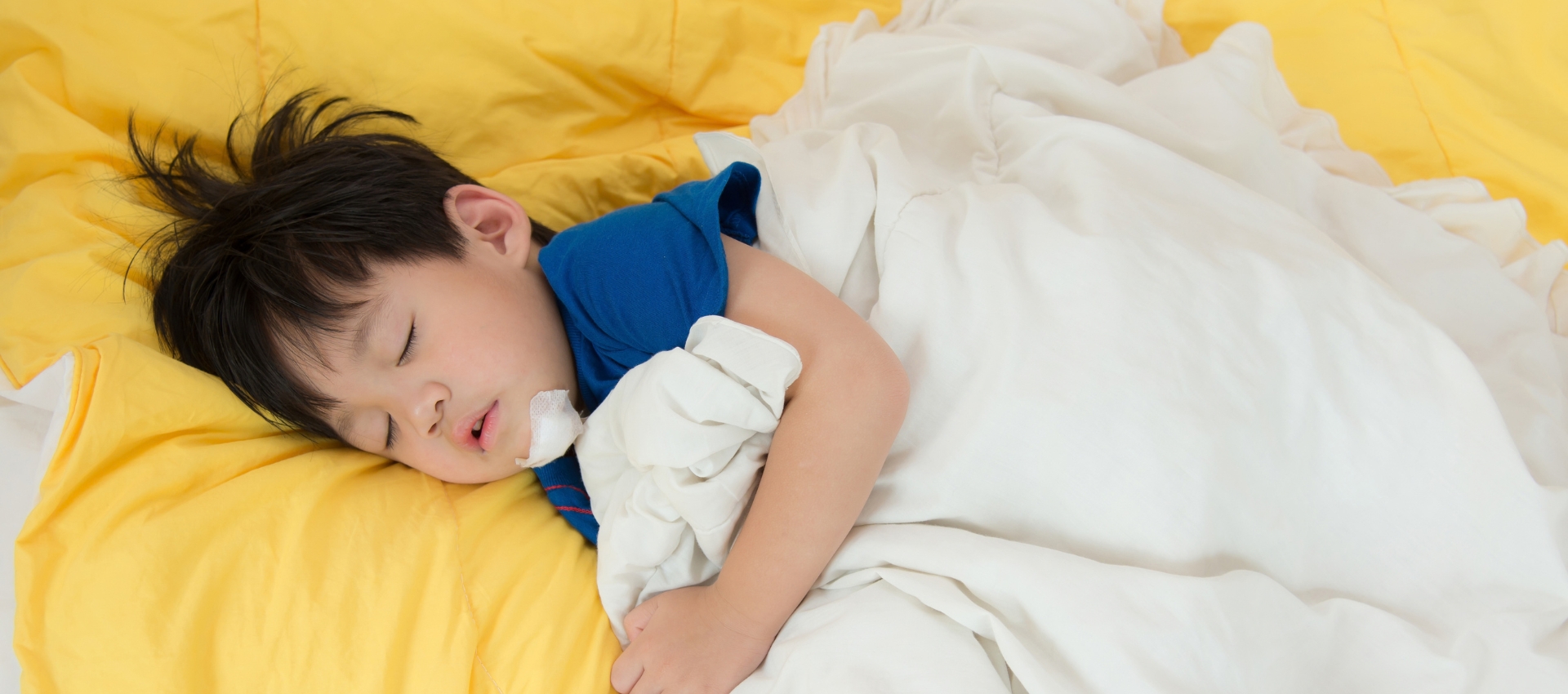
It’s late. You peek into your child’s room and hear it: snoring loud enough to compete with the ceiling fan. Maybe you’ve also noticed they sleep with their mouth open, toss and turn all night, or are impossible to wake for school. It’s tempting to shrug it off as “just how kids sleep.”
But regular snoring in children is not something to ignore. It can be a sign of sleep-disordered breathing, a range of problems that affect how well your child breathes, sleeps, grows, and even behaves during the day.
Why Kids’ Snoring Deserves Attention
The American Academy of Pediatrics recommends that pediatricians ask about snoring at routine checkups. Its clinical guideline estimates that obstructive sleep apnea affects roughly 1 to 5 percent of children, and many more snore regularly.
When a child’s airway narrows during sleep, their body works harder to breathe. Sleep gets broken into fragments, even if they never fully wake up. Over time, poor sleep can affect mood, focus, learning, and growth.
Signs to Watch For
Sleep-disordered breathing doesn’t always look like a “sleep problem.” Watch for:
- Snoring three or more nights a week
- Mouth breathing during the day or at night
- Pauses in breathing, gasping, or snorting during sleep
- Restless sleep or unusual sleeping positions, like a tilted-back head
- Bedwetting after they’d already been dry at night
- Trouble waking up and daytime tiredness
- Trouble focusing, hyperactivity, or irritability that can look like ADHD
- Frequent nightmares or night terrors
- Dark circles under the eyes
- A narrow jaw or crowded teeth
If you’re checking off several of these, it’s worth a professional evaluation.
What Causes Breathing Problems in Kids?
Enlarged tonsils and adenoids are one of the most common causes. Other contributors include allergies and nasal congestion, a narrow upper jaw, a tongue-tie that keeps the tongue low in the mouth, and long-term mouth breathing habits.
Allergies are a real factor here on the Gulf Coast. Spring pine pollen and humid summers can leave kids congested for weeks at a time, and a stuffy nose pushes them toward mouth breathing.
How the Kidswell Program Works
Our Kidswell program is built to find out why your child isn’t breathing well at night, then address it while they’re still growing.
- Children’s sleep assessment. We talk with you about your child’s sleep, behavior, health history, and daily habits.
- Airway and growth evaluation. We look at your child’s jaws, palate, tongue position, tonsils, and breathing pattern. When appropriate, we use specialized imaging to see the airway and how the face is developing.
- Sleep testing when needed. Depending on your child’s needs, that may mean a home sleep study or a referral for an in-lab study.
- A personalized plan. Options may include myofunctional therapy, orthopedic growth appliances that gently widen a narrow palate, tongue-tie evaluation and release, and collaboration with your pediatrician or an ENT specialist.
Growth is the key word. Children’s jaws are still developing, which gives us a window to guide growth in a healthier direction. The earlier we start, the more we can often do.
Working With Your Child’s Care Team
We don’t replace your pediatrician. We work alongside them. If your child has very large tonsils or adenoids, an ENT may recommend removing them, and we’ll help coordinate that care. Our role is to evaluate the airway, jaw, and oral habits that often get overlooked.
For Military and Newly Relocated Families
Our area is home to many military families from Tyndall Air Force Base and Naval Support Activity Panama City, plus plenty of families who’ve just moved to the Panhandle. Dr. Noana Issar-Grill spent almost 24 years in the Air Force, so she understands how often military kids change doctors and schools. One parent who had just moved to the area told us her children had a great first appointment with our team.
Schedule Your Child’s Sleep Assessment
If your child snores, breathes through their mouth, or never seems rested, let’s find out why. Call (850) 312-1850 or book online for a children’s sleep assessment at our Panama City Beach or Santa Rosa Beach office.
Frequently Asked Questions
At what age should my child be evaluated?
If your child snores regularly or shows several signs on this list, it’s worth asking about an evaluation, whatever their age. Our team will let you know whether now is the right time.
Will my child grow out of snoring?
Some children do. But regular snoring, especially with pauses in breathing, should be evaluated rather than waited out.
Can sleep problems really affect behavior and school performance?
Yes. Poor sleep can affect attention, mood, and learning. Some children with sleep-disordered breathing show behavior that looks like ADHD.
Does my child need their tonsils removed?
Not always. That decision belongs to your child’s physician or ENT. We evaluate the other factors, like jaw growth and tongue posture, that can also affect breathing.
Are orthopedic growth appliances the same as braces?
No. Braces move teeth. Growth appliances guide how the jaws develop, such as gently widening a narrow upper jaw.
What should I bring to my child’s first visit?
Bring a list of symptoms, any recent notes from your pediatrician or ENT, and, if you can, a short phone video of your child sleeping. Hearing the snoring and breathing helps our team a lot.
Share this post